Group 1 and Group 2 drone threats don’t discriminate across terrain or location. Archimedes adds an autonomous laser option to counter-drone defense, designed to scale across military and civilian infrastructure applications. The operational environment determines the configuration, including how it integrates with existing defense systems.
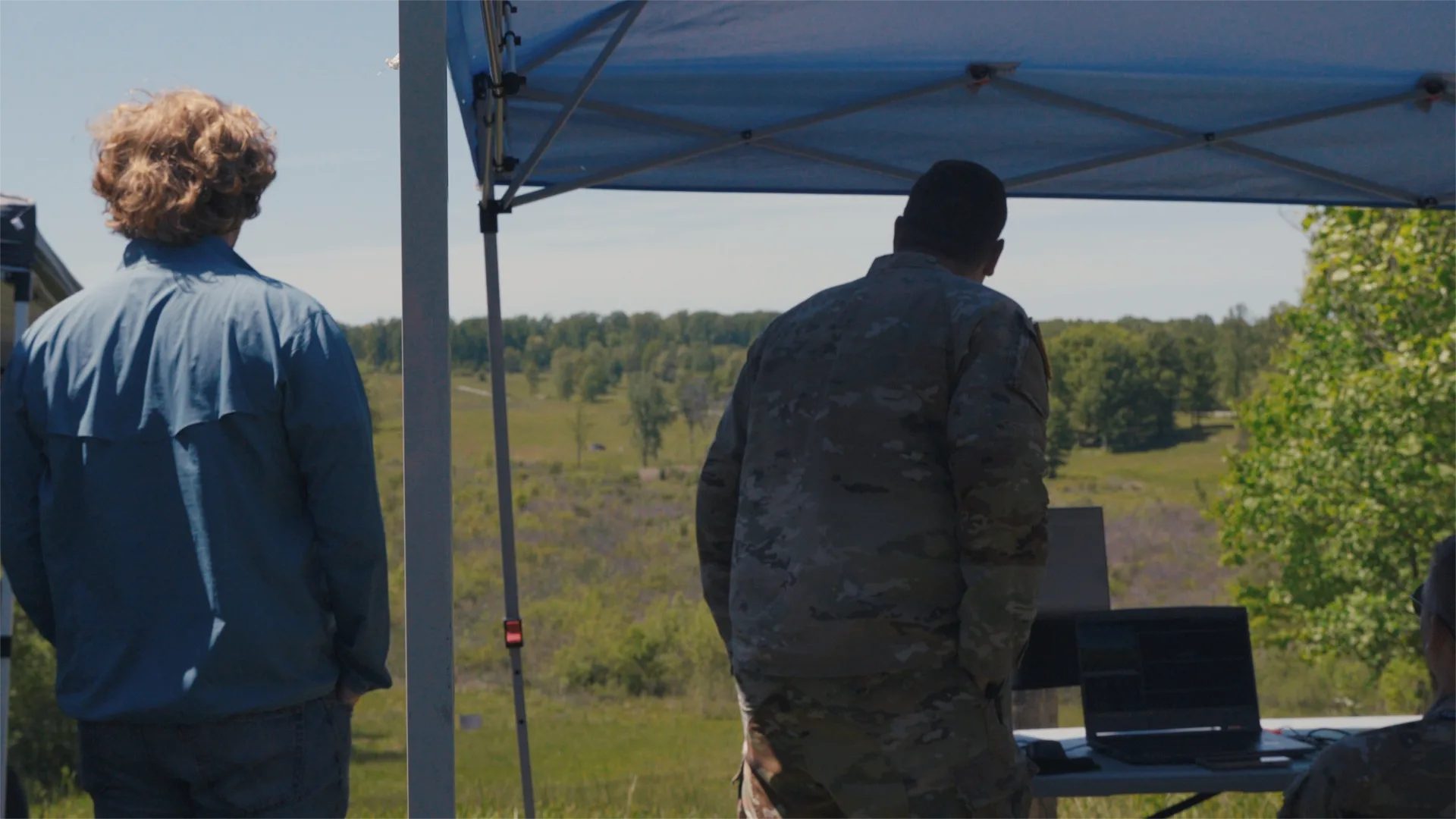
A real fixed-site installation and its operating environment.
Fixed site
Scalable defense for critical assets.
Fixed-site configurations bring sensing, engagement, command, power, and support into one protection architecture for military installations in the U.S. and abroad, expeditionary sites, and critical infrastructure.
Placeholder
Archimedes integrated on a partner vehicle in the field.
Mobile platform
Force multiplier for mobile platforms.
Archimedes brings precise laser engagement to mobile platforms in a compact, low-weight system. Electric power supports repeat engagements without expending an interceptor for each laser shot, reducing the ammunition burden. The American Rheinmetall partnership advances integration with robotic combat vehicles.
Critical infrastructure
Establish suitability first.
Suitability and permitted use must be established for each application. Protecting critical infrastructure brings specific requirements for authority, airspace, public safety, and continuity of operations.
Connect to the defense already in place.
Archimedes is designed to integrate with existing command-and-control systems, adding laser engagement to the operator’s current defense architecture.
At Operation Jailbreak, Archimedes integrated with Anduril Lattice for coordinated counter-UAS operations. The animation illustrates an application concept.